
Sauna heat and blood circulation: the role of vasodilation
As you enter a sauna, your body senses the rise in temperature and reacts at once to protect its internal balance. The blood vessels close to the skin widen, a phenomenon known as vasodilation. This natural mechanism allows more blood to travel towards the surface of the body in order to shed the excess heat.
In practice, this opening of the vessels eases the flow of blood right across the network, out to the extremities that often receive less, such as the hands and feet. Within the first few minutes many regulars notice a pleasant warmth spreading through the whole body and a sense of deep relaxation. The heart rate rises gently, rather as it would on a brisk walk, giving the cardiovascular system a measured workout.
Scientific work suggests that regular exposure to heat supports the suppleness of the vessels and contributes to a well functioning circulatory system. Without being a medical promise, the ritual belongs to a way of living in which the body learns, session after session, to handle heat better and to get its circulation moving.
Hot and cold alternation: the Nordic habit that energises
The true art of the Nordic sauna lies in alternating hot and cold. After the dry heat of the cabin, a spell in the cold (a cool shower, a plunge into a pool or simply the sharp outdoor air) produces the opposite of vasodilation: the vessels tighten, which is vasoconstriction. This vascular workout sits at the heart of the Scandinavian tradition.
By stringing these swings in temperature together, the blood network contracts and then expands, like a natural pump driving the circulation. Many go on to describe a bracing freshness, a clear head and a body brought back to life. It is precisely this oscillation that gives the sauna its reputation as an energising ritual.
To make the most of that alternation, a few simple rules help you look after your body:
- ✓Always start with the heat, then the cold, never the other way round.
- ✓Listen to how you feel: the cold should be invigorating, never painful.
- ✓Allow yourself a rest between cycles so the body can regulate itself.
- ✓Drink generously before, during and after the session.
A renewed sense of energy and vitality
Beyond the physiology, the sauna experience is above all a matter of feeling. On the way out, many describe a lightness, as though the body had been set in motion from within. That vitality comes from the combination of heat, quickened circulation and the muscular release that builds during the session.
Sauna heat also helps release the tension gathered through the day. The muscles unknot, the breathing settles and the mind follows the same decompression. Many regulars build the sauna into their recovery routine after sport or at the end of the day, for calmer sleep and steadier energy.
This lift is nothing spectacular or immediate: it is built through regularity. Like forest bathing or a walk in the open air, the sauna becomes an appointment with yourself, a moment when the body recharges and vitality is quietly cultivated.
Sauna and the heart: what caution tells us
Since heat places demands on the cardiovascular system, it is fair to ask what a sauna does to the heart. The rise in heart rate during a session resembles that of light to moderate physical effort, and research suggests that regular practice contributes to the cardiovascular wellbeing of people in good health.
That said, the sauna is neither a treatment nor a substitute for medical care. We want to be clear on this point: no benefit should be read as a promise of a cure. The sauna is a way of living, a ritual of relaxation and recovery, not a medical therapy.
Some situations call for particular vigilance and for medical advice beforehand. The sauna is generally not advised, or should be used on the guidance of a health professional, in the following cases:
- ✓Known heart conditions, uncontrolled high blood pressure or a history of cardiovascular events.
- ✓Low blood pressure or a tendency to dizziness and fainting.
- ✓Pregnancy, unless your doctor explicitly agrees.
- ✓Fever, an ongoing infection or extreme fatigue.
- ✓Alcohol, which must be avoided entirely before and during the session.
Living the ritual at home with an Ørigin outdoor sauna
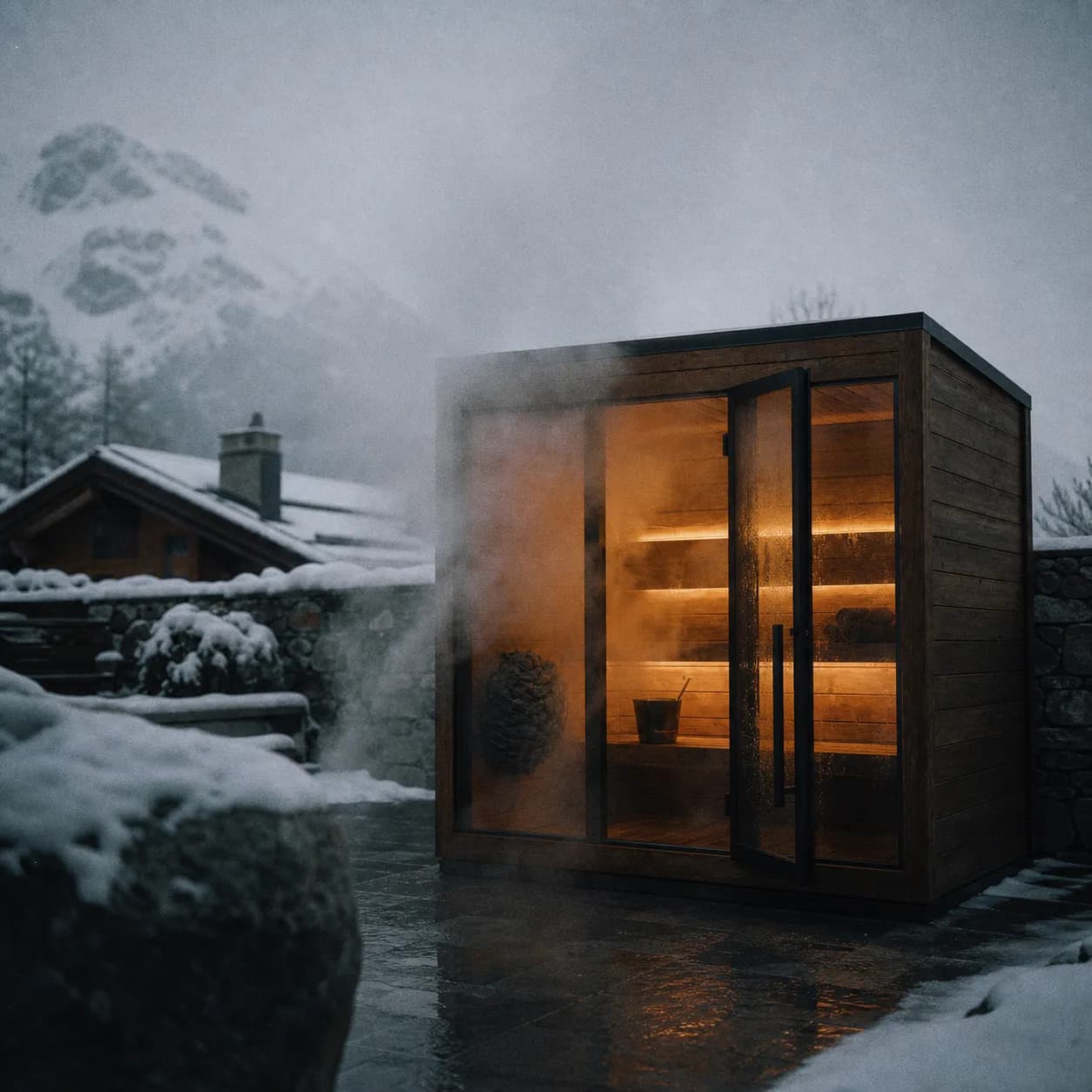
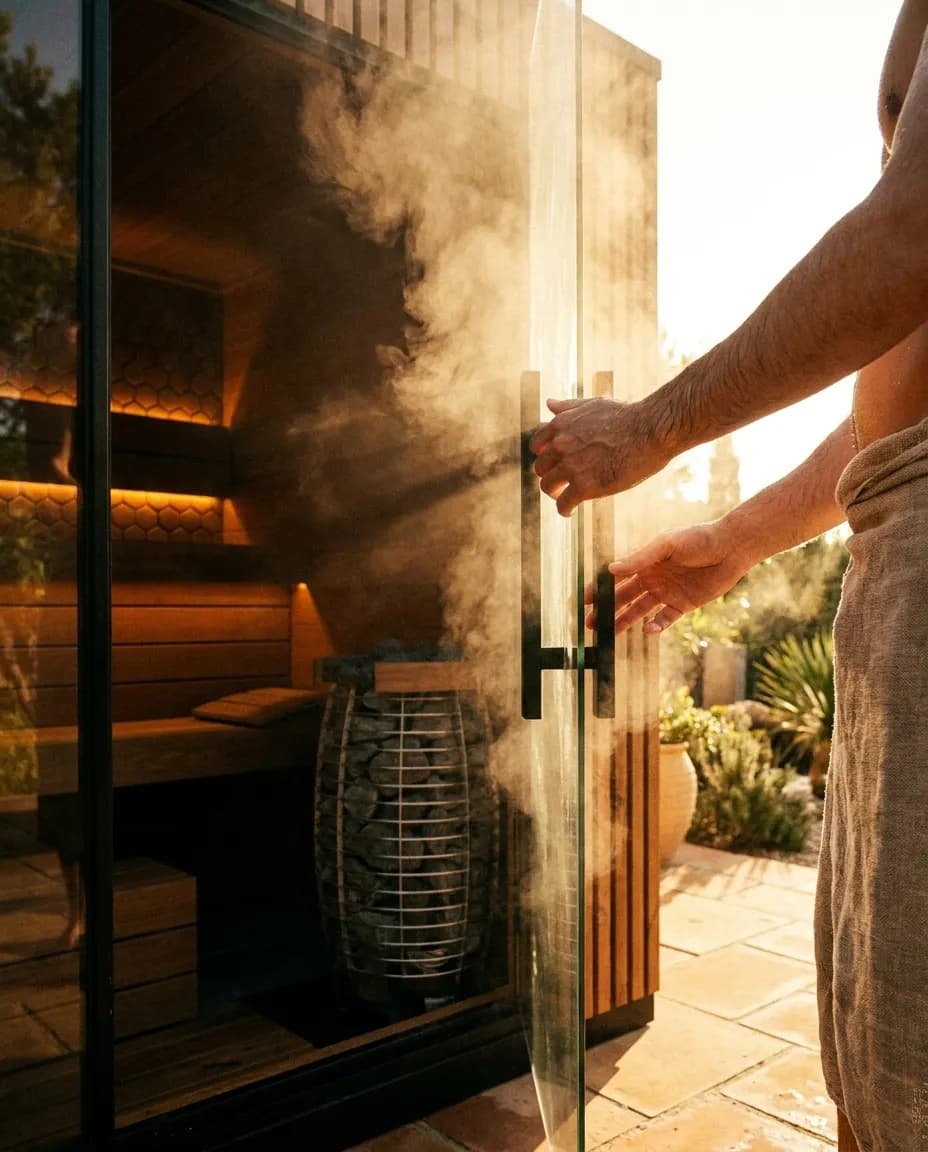
Enjoying this circulatory ritual no longer means travelling to a spa: a sauna installed in your garden turns the experience into a daily habit. At Ørigin we design premium Nordic outdoor saunas, built in Estonia from robust, warm ThermoWood®, made to last and to blend into the landscape.
To get the full benefit of hot and cold alternation, site the sauna near somewhere you can cool off, whether an outdoor shower, a plunge pool or simply the fresh air of the garden. Our Huum heaters deliver an enveloping, well controlled heat, true to the Scandinavian spirit, for sessions that are as authentic as they are comfortable.
Our Round Cube and Viva ranges adapt to every garden and every taste. To keep things straightforward, Ørigin offers prices with installation included, payment in two instalments, delivery and installation in France, Belgium and Luxembourg, and a 24-month warranty.
The sauna holds a subtle dialogue with your circulation: it opens the vessels, gets the flow moving and leaves behind that precious feeling of vitality restored. Taken regularly and sensibly, this Nordic ritual becomes a pocket of wellbeing written into everyday life. If you feel like bringing that Scandinavian spirit home, take the time to build the sauna that suits you with our configurator, or talk to an Ørigin adviser for a personalised quote. Your vitality ritual starts in your garden.
Frequently asked questions
Does a sauna really improve blood circulation?
Sauna heat triggers vasodilation: the vessels widen and blood flows more freely to the skin and the extremities. Used regularly, the sauna supports vascular suppleness and contributes to circulatory wellbeing. It is a support for a healthy way of living, not a medical treatment.
Why alternate hot and cold after the sauna?
Alternating hot and cold works the vessels like a natural pump: heat widens them, cold tightens them. This vascular workout stimulates the circulation and leaves a pleasant sense of tone and freshness. Always start with the heat, then the cold, and listen to how you feel.
How often should you use the sauna to feel a lift in vitality?
It depends on your rhythm and your state of health. Many regulars take two or three sessions a week and find they recover better and feel steadier energy. Regularity counts for more than intensity: moderate, frequent sessions beat the occasional long exposure.
Is the sauna not recommended for certain people?
Yes. The sauna should be avoided, or used only after medical advice, in cases of heart conditions, uncontrolled high blood pressure, low blood pressure, pregnancy, fever or infection. Alcohol should also be avoided before and during the session. If in doubt, always ask a health professional.