Why heat feels so good on tired muscles
As you step into a sauna, your skin temperature climbs and the body responds through a well known mechanism: vasodilation. The blood vessels widen, blood flows more freely and reaches deeper into the tissues you worked during training. That improved circulation helps carry oxygen and nutrients to the muscle fibres, while helping the body clear the waste produced by exertion.
Beyond the mechanics, there is the feeling. The deep dry heat of a sauna invites the muscles to let go, the shoulders to drop, the breath to slow. Many regulars notice tension easing almost at once, as though the body had finally agreed to switch off. It is that overall release, as much as the physiological effect, that makes the sauna so valuable in a recovery routine.
- ✓Vasodilation: the vessels open and circulation picks up
- ✓Oxygenation: better blood flow feeds the muscles you have worked
- ✓Relaxation: heat releases the muscles and calms the nervous system
- ✓Winding down: the ideal transition between effort and rest
Soreness and recovery: what you feel, and what the research suggests
Delayed soreness, that familiar ache which shows up one or two days after a hard session, comes from the micro-strain placed on the muscle fibres. A sauna will not wipe it away by magic, but research suggests that heat, by stimulating circulation, contributes to a more comfortable sense of recovery and to less stiffness on waking.
Let's be honest: a sauna replaces neither a good night's sleep, nor sensible nutrition, nor intelligent management of your training load. Those are the real pillars of recovery. The sauna works alongside them, as a piece of self-care, and many athletes build it in precisely because it makes the hours after training more enjoyable.
A word of caution: heat places demands on the heart and on blood pressure. If you have a heart condition or low blood pressure, or if you are pregnant, seek medical advice before making the sauna part of your routine.
The Nordic athlete's routine
In the Nordic countries the sauna is no passing trend but a way of life handed down through the generations. After a run in the forest, a weights session or a cold plunge, you return to the heat of the sauna the way you return to a familiar hearth. The ritual is unhurried: you settle in, you breathe, you let the heat do its work, sometimes broken by a step out into the cool to wake the circulation.
That alternation of hot and cold, so dear to the Scandinavian tradition, extends the feeling of vitality. The contrast in temperature restarts the body and delivers the lift in energy so many athletes are looking for. The great Nordic lesson comes down to a few words: recovery is something you enjoy, not something you endure. The sauna becomes the moment of the day you look forward to most.
When and how long: a few simple guidelines
The question comes up often: should you use the sauna straight after training, or later? Both approaches make sense. A session within the hour after exercise extends the wind-down and the muscular release. Others prefer to wait until the next day, to target soreness once it has set in. Listen to your body and find the rhythm that suits you.
On length, the wise course is moderation. Fifteen to twenty minutes is usually enough to feel the benefits without draining a body already tested by training. There is no need to push further: recovery is not a competition. A few sessions a week, taken consistently, are worth far more than the occasional marathon.
One last habit, and by no means the least: hydration. You sweat heavily in a sauna, so drink before and again afterwards. If you feel light-headed or uncomfortable, step out straight away and let your body find its temperature again.
- ✓When: within the hour after training for relaxation, or the next day for soreness
- ✓How long: around 15 to 20 minutes per session
- ✓Frequency: a few sessions a week, gently and consistently
- ✓Hydration: drink before and after, and always listen to how you feel
An Ørigin outdoor sauna: your recovery ritual at home
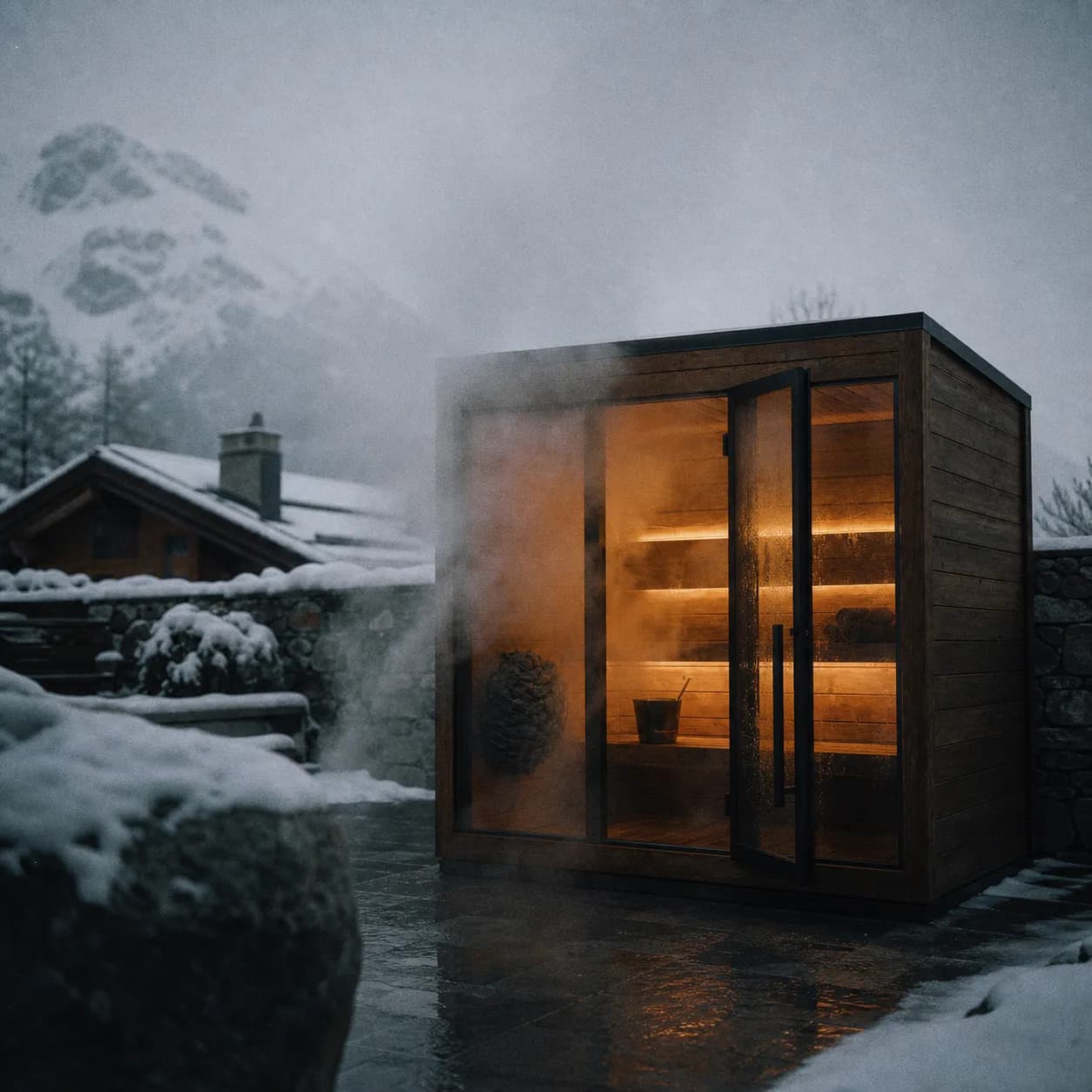
Turning recovery into a real ritual calls for a place of your own, there whenever your body asks for it. That is the whole idea behind Ørigin outdoor saunas: premium Nordic cabins in ThermoWood®, designed and built in Estonia, made to stand up to all four seasons at the heart of your garden.
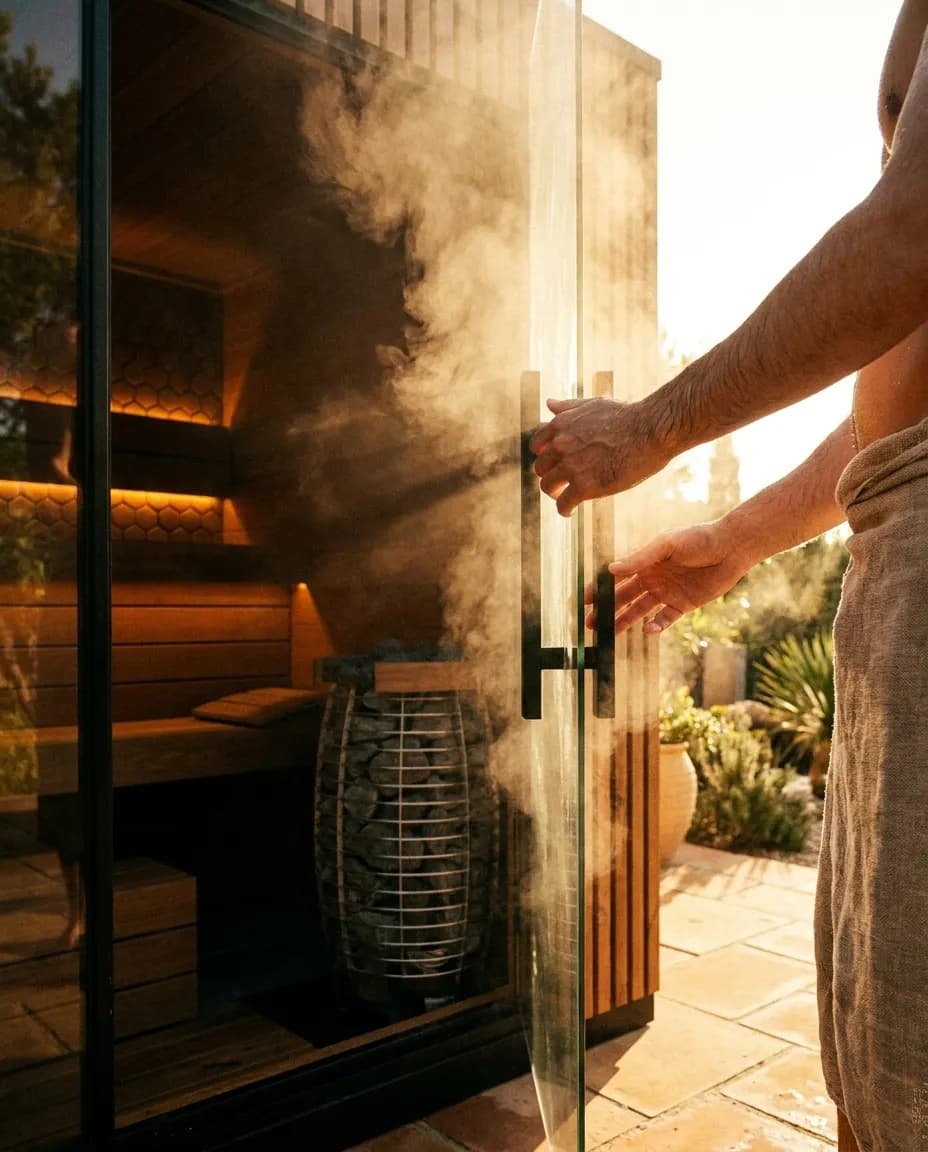
Every model in the Round Cube and Viva ranges comes with a Huum heater, giving an enveloping heat true to tradition. Above all, everything is built around simplicity: Ørigin delivers and installs your sauna in France, Belgium and Luxembourg, at a price that includes the heater and the installation, with the option of paying in two instalments and a 24-month warranty. All that is left is to push the door open after training and let the heat do the rest.
Sauna and muscle recovery make a simple, natural alliance: heat gets the circulation moving, relaxes the muscles and turns the hours after training into a moment of care you genuinely look forward to. As long as you listen to your body, stay hydrated and keep your sessions sensible, it becomes a faithful ally in your sporting routine. So why not picture that ritual at home, in the quiet of your garden? Configure your Ørigin outdoor sauna or request a quote with installation included: an adviser will help you find the model that fits you.
Frequently asked questions
Does a sauna really help you recover after exercise?
Sauna heat encourages blood flow through vasodilation and brings a muscular release that many athletes value after exercise. Research suggests a more comfortable sense of recovery. It remains, however, a complement to sleep, nutrition and a well managed training load, which are still the real pillars of recovery.
How long should you stay in the sauna after training?
Fifteen to twenty minutes is usually enough to enjoy the benefits without tiring a body that has already worked hard. A sensible length repeated a few times a week beats one overly long session. Always listen to how you feel and step out if you become uncomfortable.
Is it better to use the sauna straight after exercise or the next day?
Both moments work. A session within the hour after exercise extends the relaxation and the wind-down, while a session the next day does more to target soreness once it has set in. Find the rhythm that matches how you feel and how your week is arranged.
Is a sauna after exercise suitable for everyone?
Heat places demands on the heart and on blood pressure. If you have a heart condition, low blood pressure or you are pregnant, seek medical advice before making the sauna part of your routine. Hydration, before and after every session, remains essential for everyone.